SWMS in South Australia: the 2 m fall threshold from 1 July 2026
Current at 2 November 2026 — reviewed against the harmonised Model WHS Regulations and Safe Work Australia's SWMS information sheet.
From 1 July 2026, construction work in South Australia with a risk of a person falling more than 2 metres is high risk construction work and needs a SWMS before it starts. SA previously used a 3 m threshold — it was the jurisdiction behind the "in some jurisdictions this is 3 metres" footnote in Safe Work Australia's SWMS guidance. The change aligns SA with the other harmonised states. Templates bought before the change that still say 3 m are now out of date for SA falls work.
What changed, exactly
| Before 1 July 2026 | From 1 July 2026 | |
|---|---|---|
| Fall-risk threshold triggering a SWMS | More than 3 m | More than 2 m |
| Alignment | SA-specific variation from the model laws | Same 2 m rule as NSW, QLD, TAS, WA and the ACT. NT residential construction uses more than 3 m from 17 July 2026. Victoria has its own 2 m rule. |
| Other 17 HRCW categories | Unchanged — see the full model-law HRCW list | |
Who this catches
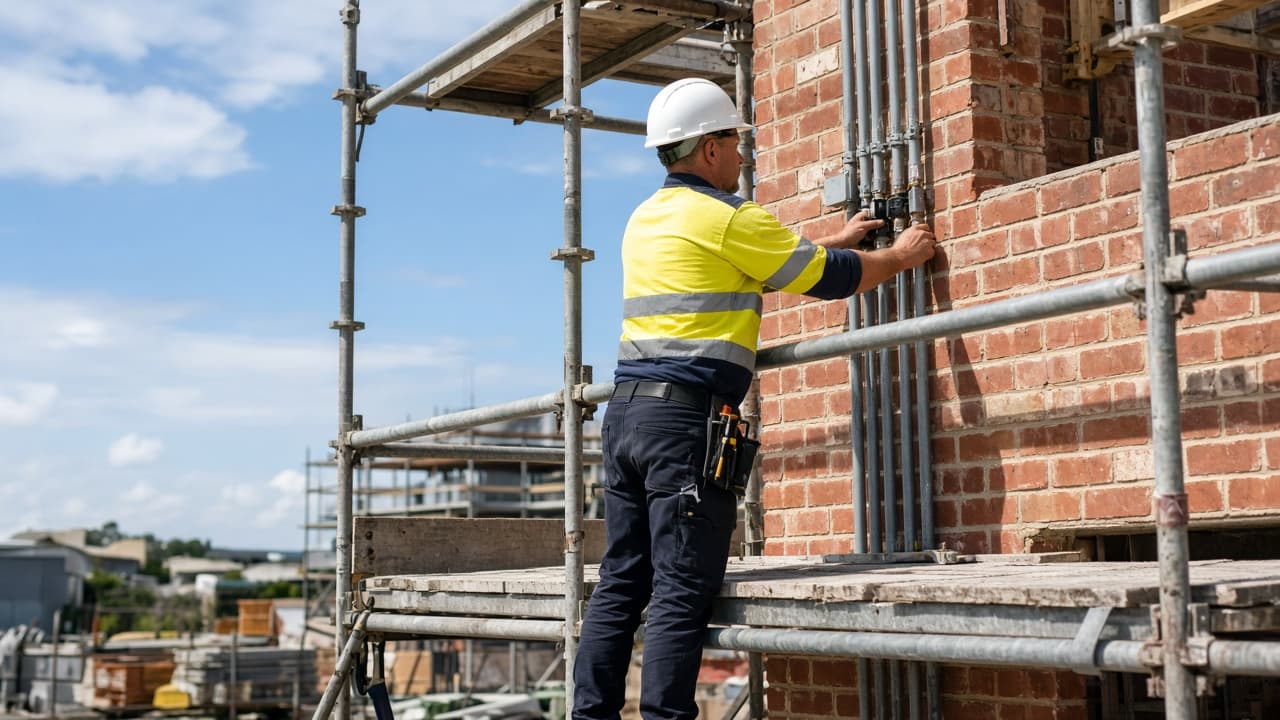
The band between 2 m and 3 m is exactly where a lot of electrical work happens: single-storey roof edges for solar PV installation, ladder and platform work on ceilings and switchrooms, mezzanines and top-of-scaffold runs. In SA those jobs previously needed no SWMS on falls grounds alone; from 1 July 2026 they do. (Much of that work was already HRCW on other grounds — energised services, ceiling spaces — but the falls line in your SWMS paperwork still has to be right.)
How to check the template you're using
- Open your SWMS's high risk construction work checklist and find the falls line.
- If it says "more than 3 m" for SA, the template predates 1 July 2026 — update it before your next SA job.
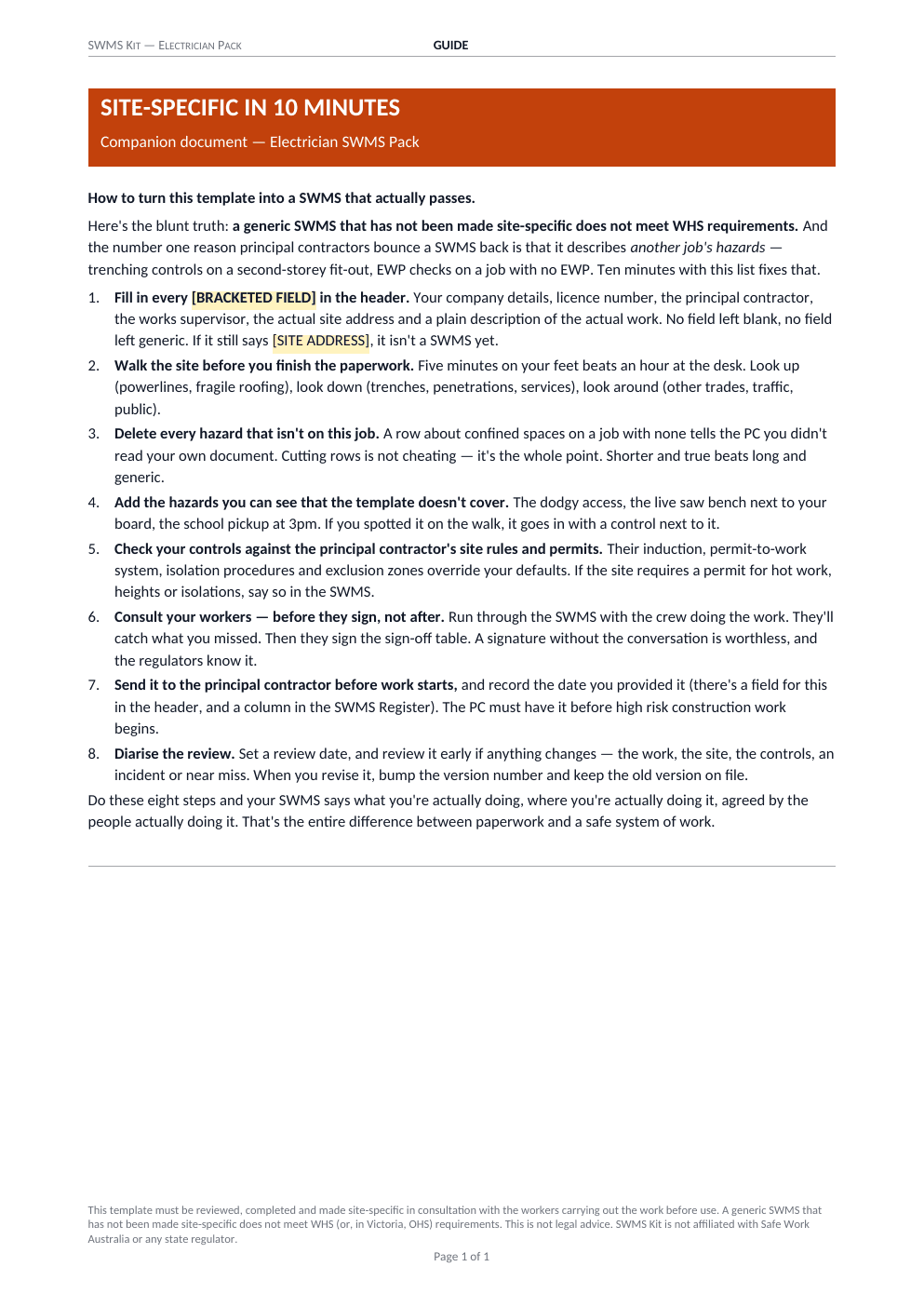
- Check the document carries a review date. Undated compliance paperwork is the first thing a principal contractor queries.
Every SWMS in the Electrician SWMS Kit already reflects the SA change — the Model WHS version's falls item carries the note "SA: 2 m threshold applies from 1 July 2026 (previously 3 m)", and every document is dated. Many template packs sold today still say 3 m.
Get the Electrician SWMS Kit — A$59
21 documents, Word + PDF, current at 2 November 2026. Or run the free pre-start SWMS checklist first.
South Australian SWMS questions
What changed on 1 July 2026?
The fall-risk threshold for high risk construction work dropped from more than 3 m to more than 2 m. Work in that band now needs a SWMS before it starts.
Is my old SWMS template still valid in SA?
If its HRCW checklist still says 3 m for falls, it's out of date for SA work from 1 July 2026. Everything else in the model-law checklist is unchanged.
Who regulates SWMS in South Australia?
SafeWork SA, under the Work Health and Safety Regulations 2012 (SA). The falls line is 2 m from 1 July 2026. A construction project — the point at which a principal contractor must be in place — is work costing $450,000 or more, not the model $250,000. The Model WHS version of a template covers SA once those two figures are right.